
Free of charge under a contract with the National Health Fund (NFZ)
Psychiatric treatment
Find out how psychiatric treatment can help you in everyday life.
Every story has a beginning.
- 01 Mindful presence
- 02 Room for emotions
- 03 Your own pace
01 — In this text
Psychiatric treatment
Psychiatric treatment draws on research into which treatments are safe and effective.
Treatment may include different types of therapy, such as pharmacotherapy, psychotherapy or a combination of the two. Your psychiatrist will discuss the options with you and will keep adjusting the treatment plan to your needs.
In reality, however, treating mental health problems is usually more complicated, because every patient is different and mental illnesses can have different causes and symptoms. Moreover, although psychiatric treatment is always based on scientific research, each patient may respond differently to medication and therapy.
That is why it is important for psychiatrists to tailor treatment to the individual needs of the patient, taking into account their medical history, mental health, lifestyle and treatment preferences. In practice, psychiatric treatment is a dynamic process that requires continuous monitoring and adjustment to the patient's individual needs.
When should you see a psychiatrist?
Sometimes life brings us difficult situations that lead to emotional and mental health problems. Some people cope with them on their own, while others need support and help from a specialist. How do you decide when to see a psychiatrist?
The first step is to pay attention to the signals your body and mind are sending you. If you are experiencing severe stress, difficulty concentrating, mood swings, problems falling asleep, irritability, a feeling of being overwhelmed or difficulties in your relationships with others, these may be signs of mental illness.
If these problems last longer than a few weeks and affect your daily functioning, it is worth consulting a psychiatrist. A psychiatrist can help with diagnosis and suggest the best treatment plan, which may include therapy, pharmacotherapy or a combination of the two. In an urgent situation, do not wait: go to the Mental Health Centre's Registration and Coordination Point (PZK) or call the helpline on 505 006 665. If a life is in danger, call 112.
Help from a psychiatrist can be particularly important in serious mental illnesses such as depression, bipolar disorder, schizophrenia or anxiety disorders. In such cases, untreated illness can lead to significant limitations in daily life.
Should you be afraid of seeing a psychiatrist?
No, there is no reason to be afraid of seeing a psychiatrist. A visit to a psychiatrist is similar to a visit to any other medical specialist, such as a family doctor or a cardiologist. A psychiatrist is a doctor who specialises in diagnosing, treating and preventing mental illness.
People are often afraid of seeing a psychiatrist because they feel ashamed to open up to a stranger, or because they fear being diagnosed with a mental illness, which could lead to social stigma. However, it is important to understand that mental illnesses matter just as much as physical illnesses. Treatment is key to improving quality of life — both your own and that of your loved ones.
How psychiatric treatment works
Psychiatric treatment is a process that may involve many different therapeutic methods, depending on the type of mental illness, the patient's individual needs and their progress in treatment.
Below is a general description of the psychiatric treatment process:
- First visit: the first visit to a psychiatrist is a time when the patient and the psychiatrist can get to know each other better and discuss matters related to the illness and its treatment. During the first visit, the doctor may conduct a medical interview to go over the history of the illness, assess the patient's mental state and make an initial diagnosis. The doctor may also carry out a physical examination to rule out other health problems that may be affecting the patient's mental state.
- Diagnosis and treatment plan: after the medical interview and physical examination, the psychiatrist will make a diagnosis and plan treatment suited to the patient. The treatment plan will be tailored to the patient's needs and individual characteristics and will depend on the type of mental illness. Treatment may include pharmacotherapy (taking medication), psychotherapy (talking with a therapist) or a combination of the two.
- Follow-up visits: once the treatment plan has been agreed, the patient should see the psychiatrist regularly so that progress can be assessed and the next steps adjusted. During a visit, the psychiatrist may carry out assessments, ask questions about the patient's condition and update the treatment plan. Regular follow-up visits are key in the treatment of mental illness.
- Working with other specialists: with more complex health problems, psychiatrists may work in a team with other specialists, such as psychologists, therapists, family doctors or addiction specialists. Working with other specialists makes comprehensive medical care possible, which can speed up treatment and improve its results.
To sum up, psychiatric treatment is a complex process that requires an individual approach to each patient. Visits to a psychiatrist are part of a treatment process that includes diagnosis, a treatment plan, regular follow-up visits and cooperation with other specialists.
Do you need help?
If you have found your way to our website, you may be someone who needs help. Every day, our experienced specialists help dozens of patients. If you are struggling with emotional or mental health problems, you should not be afraid to seek psychiatric help.
Seeking help does not mean that you are weak or emotionally unstable. It is courage and strength of mind that will help you decide to get help from a specialist. So don't hesitate to seek help when you need it.
02 — First appointment
Starting doesn’t
have to be perfect.
You don’t need a ready-made story. You can start with a single sentence. Or with: “I don’t know where to start”.
The first step
Above all, the process of getting help at our centre begins with you. Deciding to seek treatment matters for many reasons. The problems you or your loved ones are struggling with can affect every aspect of daily life, including work, family life and social relationships.
Registration
You don't need to book an appointment or register in advance. You can visit during opening hours if you're concerned about your own mental health or that of someone close to you.
Diagnosis
After talking with you and carrying out the necessary assessments, a specialist will prepare a personalised treatment plan tailored to your needs and the problems you are facing. If you need urgent help, within 72 hours of your first contact with the Registration and Coordination Point (PZK) we will agree a date for you to be seen and tell you where you will get care.
You can ask how appointments work and which forms of support are available before your treatment starts. We describe the whole process on the How we help page.
A little room for what matters
“Not everything has to
be put into words.
We can start from there.”
One conversation. Your first thread.
03 — Team
Who you’ll meet.
Psychiatrist
Agnieszka Basicz
She is a specialist psychiatrist who graduated from the Jagiellonian University Medical College in Kraków. She has worked on inpatient psychiatric wards and in mental health centres.
Specialist psychiatrist
Dr Magdalena Borowska
She is a specialist in psychiatry and a graduate of the Faculty of Medicine with the English Language Division at the Medical University of Lublin.
Psychiatrist
Dr Katarzyna Ochyra
My name is Katarzyna Ochyra and I am a specialist in adult psychiatry. I completed my medical studies at the Faculty of Medicine of the Jagiellonian University Medical College in Kraków in 2016.
Psychiatric nurse
Halina Olszewska
She graduated in nursing from the Beskidzka Wyższa Szkoła Umiejętności in Żywiec. She gained her first experience at the Dr Józef Babiński Clinical Hospital, where she still works today. She has been part of the team at the Mental Health Centre in Wieliczka for five years.
Psychiatrist
Dr Kiryl Savitski
A psychiatrist with more than 7 years' experience. He diagnoses and treats mental disorders in adults (including mood disorders such as depression, anxiety disorders, schizophrenia and personality disorders).
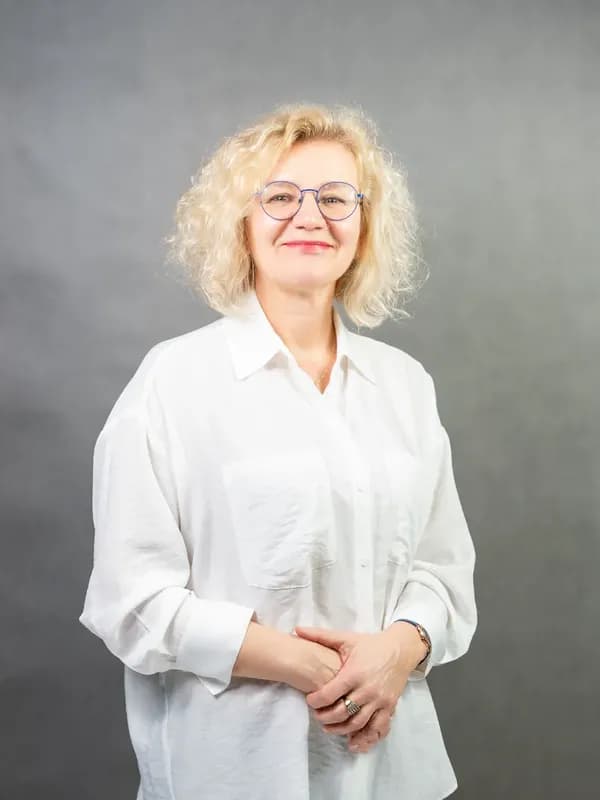
Specialist psychiatrist
Iwona Timek
04 — Your questions
It’s natural
to want to know.
A first appointment can feel new. A few answers may help you feel more at ease with this beginning.
All questions and answersWhat kind of help does a mental health centre offer?
At the Mental Health Centre, you can get specialist help from:
- a psychiatrist
- a psychiatric nurse
- a psychologist
- a psychotherapist
- a community therapist
- a peer support worker
Importantly, the help we provide is completely free of charge.
Who can get help at mental health centres?
The Mental Health Centre offers help to adults who are struggling with mental disorders. All family members, loved ones and friends of people who need support can also get help from the centre. If you have any questions or concerns, you can always contact our centre.
Please note, however, that the centre does not provide healthcare services to children and young people under 18, to people whose main problem is addiction, or to patients who have been placed in psychiatric detention. People with an addiction can get help from an addiction treatment clinic. You can find clinics in Wieliczka and Kraków that offer treatment funded by the National Health Fund (NFZ) using the NFZ clinic finder (in Polish).
That said, people who have been discharged from hospital and need support in their recovery can also use the centre's services.
How should I prepare for a visit to a mental health centre?
When you come to a mental health centre, remember to bring any records of your treatment history. Hospital discharge letters from previous stays, test results, prescriptions and information about the medicines you take are all important. This gives the centre's staff a better picture of your medical situation, so they can tailor their help to your needs. It is also a good idea to bring an identity document to your visit, to make registration and getting help easier.
Does the Mental Health Centre (CZP) work with other support organisations?
Yes. We work with a network of social welfare institutions that offer support in many areas of life, including mental health. They include social welfare centres, municipal social welfare centres, county family support centres, residential care homes and crisis intervention centres. These institutions help people in need, including in crisis situations related to mental disorders.
Institutions we work with in Wieliczka County:
- Miejsko-Gminny Ośrodek Pomocy Społecznej w Wieliczce (municipal social welfare centre) https://mgopswieliczka.pl/
- Miejsko-Gminny Ośrodek Pomocy Społecznej w Niepołomicach (municipal social welfare centre) https://niepolomice.naszops.pl/
- Gminny Ośrodek Pomocy Społecznej w Biskupicach z siedzibą w Trąbkach (municipal social welfare centre) https://biskupice.pl/102/70/gminny-osrodek-pomocy-spolecznej-w-biskupicach-z-siedziba-w-trabkach.html
- Gminny Ośrodek Pomocy Społecznej w Gdowie (municipal social welfare centre) https://www.gdow.pl/mieszkaniec/pomoc-spoleczna/gminny-osrodek-pomocy-spolecznej
- Gminny Ośrodek Pomocy Społecznej w Kłaju (municipal social welfare centre) https://gopsklaj.pl/
- ŚDS Tomaszkowice 455, 32-020 Wieliczka (community self-help centre) http://www.sdstomaszkowice.pl/kontakt
- ŚDS Zagórzany (community self-help centre) http://www.sdszagorzany.pl/
- ŚDS Wieliczka (community self-help centre) http://fundacja-leonardo.pl/srodowiskowy-dom-samopomocy-wieliczka/
- ŚDS Brzezie (community self-help centre) https://www.facebook.com/sdsbrzezie/?locale=pl_PL
- ŚDS Śledziejowice (community self-help centre) https://sledziejowice.pl/?page_id=141
- Warsztaty Terapii Zajęciowej w Podolanach (occupational therapy workshops) https://www.fonpodolany.pl/warsztaty-terapii-zajeciowej/
- Warsztaty Terapii Zajęciowej w Śledziejowicach (occupational therapy workshops) https://sledziejowice.pl/?page_id=141
- Dom Pomocy Społecznej Sułków (residential care home)
- Dom Pomocy Społecznej Śledziejowice (residential care home) https://www.larche.org.pl/sledziejowice/
- Dom Pomocy Społecznej Caritas Archidiecezji Krakowskiej Biskupice (residential care home) https://biskupice.krakowcaritas.pl/
- Dom Pomocy Społecznej „Miłosierny Samarytanin” Grabie (residential care home) https://gaudiumetspes.pl/dps-grabie/
- Dom Pomocy Społecznej Staniątki (residential care home) https://pomocblizniemu.org/dom-pomocy-spolecznej/
- Dom Pobytu Dziennego Klub Retro Staniątki (day care centre) https://pomocblizniemu.org/
- Dom Pomocy Społecznej Zapiecek w Zabierzowie Bocheńskim (residential care home) https://www.zapiecek.biz/
- Powiatowe Centrum Pomocy Rodzinie w Wieliczce (county family support centre) https://pcpr-wieliczka.pl/
- Powiatowy Urząd Pracy w Wieliczce (county labour office) https://wieliczka.praca.gov.pl/
- Fundacja L'Arche (L'Arche Foundation) https://www.larche.org.pl/sledziejowice/
- Fundacja Osób Niepełnosprawnych w Podolanach (foundation for people with disabilities) https://www.fonpodolany.pl/
- Fundacja Rozwoju Przedsiębiorczości i Inicjatyw Społecznych Proelio (Proelio Foundation for the Development of Entrepreneurship and Social Initiatives)
- Caritas Archidiecezji Krakowskiej, Punkt Socjalny im. bł. Edmunda Bojanowskiego (Caritas of the Archdiocese of Kraków, Blessed Edmund Bojanowski Social Assistance Point) https://krakowcaritas.pl/placowki.php/placowka/38
- Stowarzyszenie Pomoc Bliźniemu Staniątki (Help Your Neighbour Association) https://pomocblizniemu.org/
- Dom Pomocy Społecznej w Bochni (residential care home) https://dpsbochnia.pl/
Help
Other services
Depression treatment
Depression affects millions of people around the world. Are there proven, effective ways to treat it?
Managing stress
Stress is a common problem in modern society, but there are effective ways to treat it. What are they?
Psychological support
Psychological support can bring relief in difficult situations. Find out when it is worth seeking it.
05 — First contact
You can start
with one question.
You don’t have to tell your whole story to ask about a first appointment.
Free of charge under a contract with the National Health Fund (NFZ)